
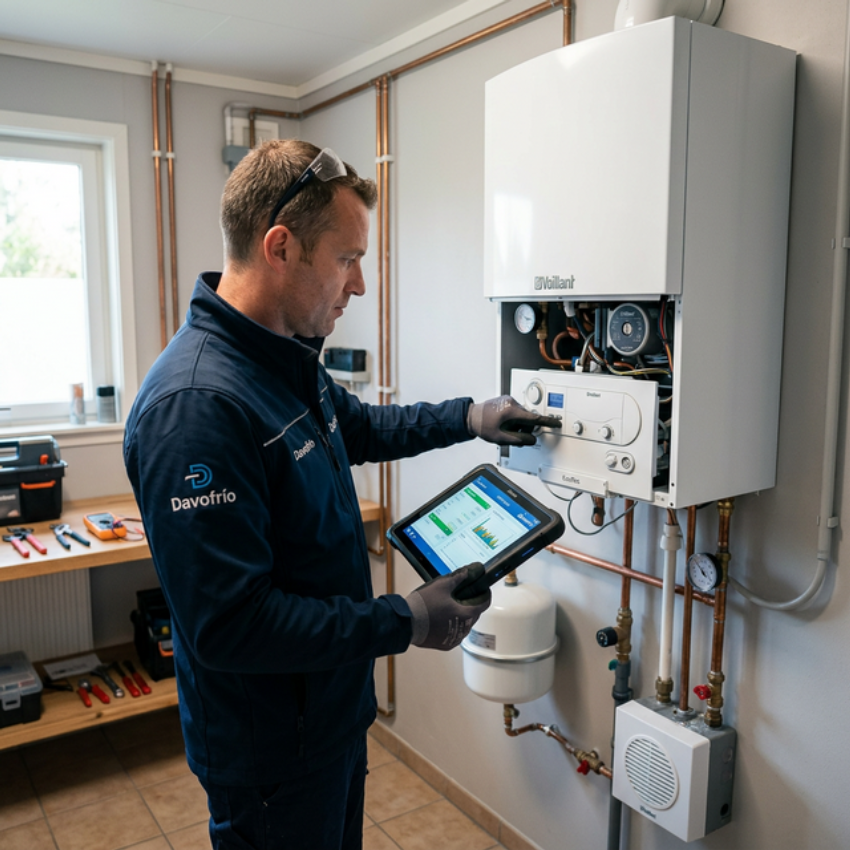
If your boiler is losing pressure, won’t light or is making strange noises just as you are turning the heating back on, it is almost always one of three things: a small leak in the circuit, air in the radiators or a safety lockout. Before anything else, check the pressure gauge, bleed the radiators and note down the error code. If the pressure drops again within a few days of topping it up, you need a technician.
In almost every flat in Valencia, the boiler spends the summer providing only hot water. When it is also asked to heat the home in October or November, it suddenly has to work with the whole radiator circuit, and that is when small leaks, trapped air or parts that have dried out appear. We explain what each symptom means, what you can safely check yourself and when it is best to have a professional look at it.
Why your boiler is losing pressure or won’t light: the 5 most common symptoms in Valencia
Each symptom points to a different cause, and they are not all equally urgent. You can fix a radiator that is cold at the top yourself in ten minutes with a bleed key. A constant drip under the boiler, on the other hand, should not be touched. This table helps you work out where you stand before you pick up the phone.
| Symptom | Most common cause | Can you check it yourself? |
|---|---|---|
| The pressure gauge drops below 1 bar every few days | A small leak in the circuit, in a radiator or in the safety valve, or a discharged expansion vessel | You can top it up to 1–1.5 bar. If it drops again, you need a technician |
| Won’t light and shows an error code | Low pressure, ignition or flame failure, or a safety lockout | Note down the code and try a reset. If it happens again, don’t keep trying |
| Radiators cold at the top | Air in the circuit | Yes: bleed the radiators and then check the pressure |
| Banging or whistling | Air, limescale in the heat exchanger or a faulty circulation pump | Bleed first. If it continues, book a service |
| Water dripping from underneath | Faulty safety valve or seal | No. Close the filling valve and call a technician |
In Valencia, two details make these faults worse. The mains water is hard, so limescale builds up in the heat exchanger and noises appear sooner. And in many flats from the 1960s and 70s, in areas such as Benicalap, Patraix or Campanar, the boiler is in the utility gallery or drying area, exposed to humidity all year round.
What you can check yourself before calling a technician
There are five checks you can do without special tools and without any risk. Do them in this order, because each one affects the next: if you bleed after topping up, the pressure drops again and you will have done the job twice.
- Check the pressure gauge. With the boiler cold, it should normally read between 1 and 1.5 bar. When hot it rises slightly, and that is normal.
- Bleed the radiators starting with the ones closest to the boiler, with a container underneath. When you have finished, check the pressure again: bleeding makes it drop.
- Top up carefully using the filling valve if it is below 1 bar, and close it fully once you reach that level.
- Note down the error code shown on the display. It saves the technician time and saves you money.
- Try a reset once only. If the boiler locks out again, stop trying.
How to bleed radiators without losing pressure
Turn the heating on for a few minutes so the water circulates, then switch it off before bleeding. Open the radiator valve slowly until air comes out with a hiss and close it as soon as water starts flowing steadily. In older buildings in the Ensanche or Russafa, with cast-iron radiators and long circuits, there is usually more air in the radiators at the end of the hallway.

Never open the boiler casing or tamper with the gas components. If you smell gas, turn off the main valve, ventilate the room and call your gas distributor’s emergency number.
Common mistakes when topping up the pressure or resetting the boiler
Many of our call-outs at this time of year start with a small fault that has got worse through trying to fix it in a hurry. These are the mistakes we see most often:
- Overfilling. If you overdo it, the safety valve releases water and it looks like there is a new leak.
- Leaving the filling valve partly open. The pressure rises by itself overnight and the boiler ends up locking out.
- Resetting it again and again. If the lockout keeps happening, the boiler is warning you about something. Persisting can damage the ignition.
- Topping up every week and not telling anyone. Fresh water brings in oxygen and limescale, which wear the circuit from the inside.
If any of these sound familiar, don’t worry. Close the filling valve, write down what you have done and tell the technician: that way they know where to start.
When to call a boiler technician in Valencia
Some faults can’t be solved by bleeding or topping up, and putting them off usually costs more. Call us if any of these happen:
- You have to top up the pressure more than once a month.
- The boiler locks out several times in a row or the error won’t clear.
- You see water under the boiler or at the safety valve outlet.
- The flame goes out by itself or the hot water comes and goes.
- Nobody has serviced it for over a year.
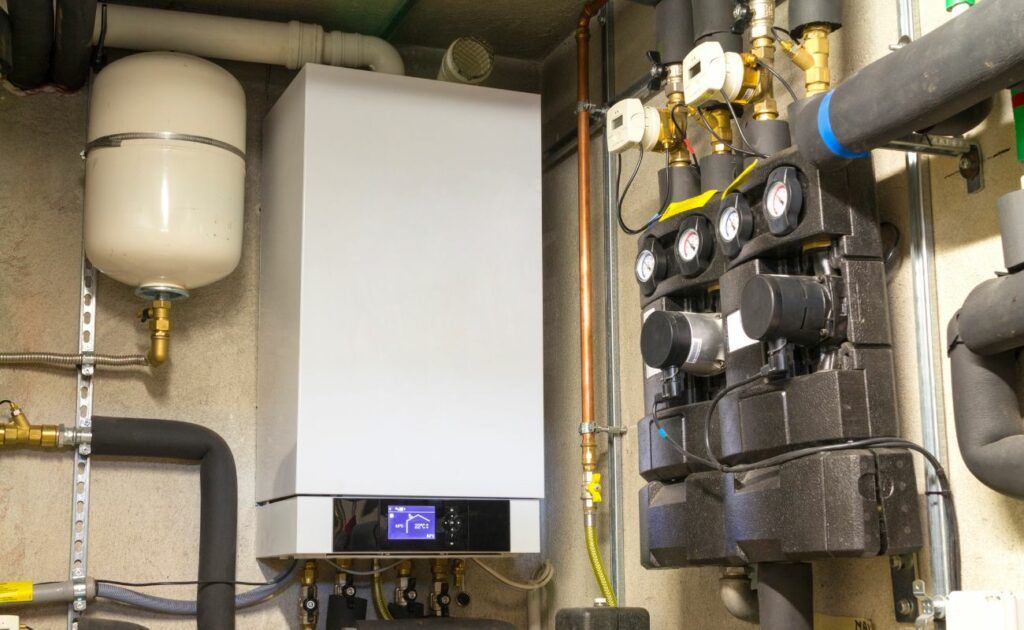
A pressure loss that keeps coming back is almost always a small leak. If it is left, the air and fresh water entering the circuit end up damaging the heat exchanger, one of the most expensive parts of the boiler. The technician checks the expansion vessel, the safety valve, the seals and the radiators until they find where the water is escaping.
Servicing your boiler before the cold arrives: how to avoid the January breakdown
In Valencia the heating is only used for a few months, which is why many boilers reach winter without anyone having looked at them since the previous year. In an autumn service we check:
- The pressure and the expansion vessel.
- Combustion and the flue.
- The burner and the circulation pump.
- The safety devices.
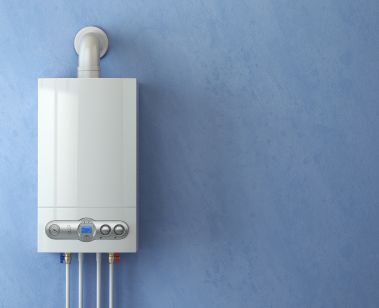
As well as preventing nasty surprises, a well-tuned boiler uses less gas. Our technicians are our own staff, we are the official service centre for the leading brands and we work with an ISO 9001:2015 quality system. If a part needs replacing, we give you a fixed quote in writing before we touch anything.
We service boilers all over the city from our branch on Avenida de les Corts Valencianes: Campanar, Benicalap, Benimaclet, Russafa, el Cabanyal and Burjassot, among other areas. You can see the full service on our page on boiler maintenance and repair in Valencia.
Frequently asked questions
Is it dangerous if the boiler loses pressure?
It is not usually dangerous, but it is a fault in progress. The boiler locks out for safety when the pressure drops too low and, if the leak continues, it can damage internal parts such as the heat exchanger.
How often should a gas boiler be serviced?
We recommend a service once a year, ideally before winter starts. In addition, gas installation regulations require a periodic inspection of the installation.
Does bleeding the radiators fix the pressure loss?
No. Bleeding removes the air, but it lowers the pressure. If, after topping up, it drops again within a few days, there is a leak that a technician needs to find.
Why does the boiler fail just when I turn the heating on?
Because in summer it only heats water and the radiator circuit sits idle. When it starts up again in autumn, trapped air, dried-out seals and leaks that went unnoticed come to light.
Does Valencia’s water affect the boiler?
Yes. Valencia’s water is hard and leaves limescale in the heat exchanger, which causes noise and a loss of performance over the years. Regular servicing means it can be spotted before the part fails.
Is your boiler playing up?
Tell us the make, the model and what is wrong, and we will tell you whether it can be sorted over the phone or needs a visit. If you also tell us the error code and how often you top up the pressure, even better: the technician arrives knowing what to look for.
When the fault can’t be fixed on the spot, we give you a fixed quote in writing after the visit, stating what needs replacing and why. We work with our own technicians and have more than 20 years’ experience with boilers in flats all over the city. More information about our branch on Davofrío Valencia or write to us via our contact.
And if your boiler is already quite old, it may be time to switch to an air-source heat pump in Valencia: heating and hot water without gas, from a single unit.
Boiler repair and servicing in Valencia: where to find us
Davofrío Valencia · Av. de les Corts Valencianes, 58, 46035 València
Phone: 960 00 20 33
Opening hours: Monday 9:00 to 16:00; Tuesday to Thursday 9:00 to 14:00 and 16:00 to 18:00; Friday 9:00 to 18:00
Areas we cover: Campanar, Benicalap, Benimaclet, Russafa, el Cabanyal, Burjassot and the metropolitan area.
Full details of the branch on Davofrío Valencia.



 Spanish
 English
 French