
Hotel air conditioning in Valencia almost always comes down to one of two layouts: a VRV/VRF system with one indoor unit per room, or a water-based installation with a chiller or heat pump and fan coils. Which one suits depends on the size of the hotel, the space on the roof, how hot water is produced and whether the building will stay open during the works.
For management and owners, what counts is what the guest notices, temperature and noise, and what shows up on the bill.
Which air-conditioning system suits a hotel in Valencia
There is no single best system for every hotel. There is one that fits the building and what it already has installed:
| System | How it works | Where it fits |
|---|---|---|
| VRV/VRF | Outdoor units on the roof and refrigerant pipework running to an indoor unit in each room. | Mid-sized city hotels and refurbishments with little room for a plant room. |
| Water-based system | A chiller or heat pump produces chilled or hot water, which is piped to a fan coil in each room. | Large hotels, buildings that already have a water network and resorts with a pool or spa. |
| Mixed | VRV in the rooms and water-based equipment or air handling units in the common areas. | Hotels with a restaurant, function rooms or a large lobby. |
With VRV (VRF is the same concept under another trade name), each room runs at its own temperature, independently and at the same time as the others. In the heat recovery version, the system cools some areas while heating others and makes use of the surplus heat from kitchens or plant rooms instead of releasing it outside. In Valencia you notice this in spring and autumn: south-facing rooms want cooling in the afternoon and north-facing ones want heating first thing in the morning.
A water-based system has another advantage: there is no refrigerant running through corridors or rooms, and production is concentrated in a single point. In return, it needs a plant room, pumps, buffer tanks and more space for pipework.
Fan coils: the equipment you hear most
A fan coil is a fan with a water coil. It is reliable, but it is the first source of noise complaints if it is badly chosen. It should be sized to deliver the required output at low speed, not at full speed.
Fitted in the ceiling of the bathroom or entrance hall, with a short duct, it is far quieter than an exposed unit next to the bed. If the access panel opens from the corridor, maintenance does not disturb the guest.
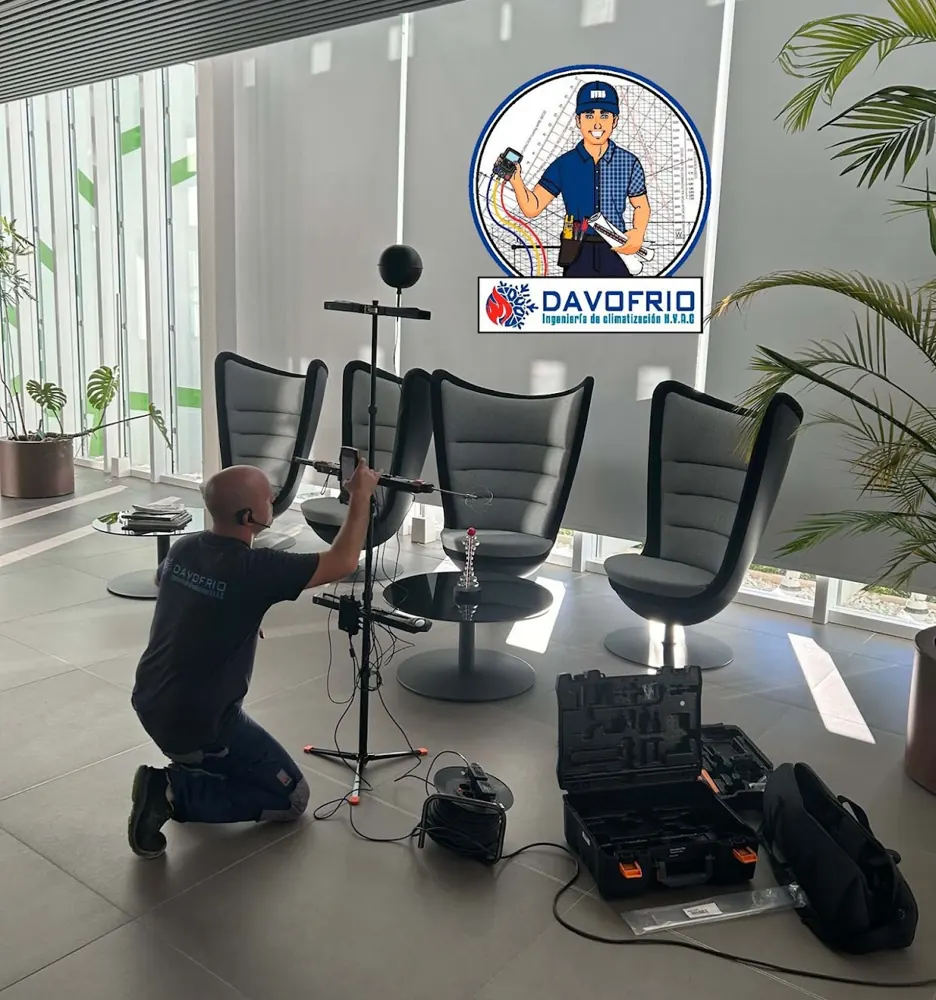
Noise in hotel rooms: where it comes from and how to prevent it
Air-conditioning noise is almost always a symptom of design. When we inspect a hotel with complaints, the cause is usually one of these:
- Grilles too small for the airflow they handle: they whistle.
- Units without anti-vibration mounts, which pass the hum into the floor slab.
- Undersized units, always running at top fan speed.
- Condensate pumps that start and stop during the night.
- Rooftop outdoor units close to top-floor rooms or neighbours. They need to be kept away from courtyards and windows and comply with the local noise bylaw.
In city-centre buildings, such as those in Ciutat Vella or the Ensanche, the roof is often the only place for the plant and sits right next to terraces and penthouses. There, the location and mountings are decided at design stage, not on site.
Energy use: what weighs most on a hotel's air-conditioning bill
A badly calculated system can use up to 35% more than expected. That is why the load calculation comes first: the orientation of each façade, glazed area, occupancy, kitchens, laundry and opening hours. The output is chosen from that, not the other way round.
After that, energy use depends mainly on how the installation is used:
- Empty rooms switched off or kept at a standby temperature.
- Set-point limits, so nobody sets the room to 17 degrees in August with the balcony door open.
- A window contact that stops the unit when it is opened.
- Heat recovery between zones, where the system allows it.
- Up-to-date maintenance: dirty filters and coils make the unit work harder for the same output.
Room-by-room and front-desk control
The thermostat should be easy to use and, linked to the key card, switch the unit off when the guest leaves. With central management, reception switches off vacant rooms and sets the temperature ahead of an arrival.
Domestic hot water in hotels: air-source heat pumps and legionella
In a hotel, hot water demand has very sharp peaks: in the morning, between breakfast and check-out, many rooms shower at the same time. The system is sized for that peak, with enough storage so the water does not go cold halfway through a shower.
An air-source heat pump produces hot water without combustion, and with Valencia's mild climate it works in good conditions almost all year round. It can cover the hot water demand or back up the existing production.
A hotel's hot water is subject to Spain's Real Decreto 487/2022 on the prevention of legionnaires' disease. The installation must make it possible to maintain temperatures, flush the system and carry out the treatments set out in the hotel's plan.
Refurbishing a hotel's air conditioning in Valencia without closing
Almost no hotel can close for this. The work is done in phases, always with rooms in operation:
- Inspect the current installation and calculate the building's real loads.
- Split the work by floors or blocks of rooms that can be blocked in the booking system.
- Install the new outdoor units or new production first, running alongside the old installation.
- Change over each block of rooms and commission it before opening up the next.
- Agree times for noisy work and group the phases outside peak occupancy.
In Valencia, those peaks are set by the Fallas, Easter Week, the summer and major conferences, and every hotel knows its own. In hotels in Malvarrosa, El Cabanyal or La Patacona de Alboraia, salt air has to be added to the mix: rooftop outdoor units need anti-corrosion protection on the coils and more frequent cleaning.
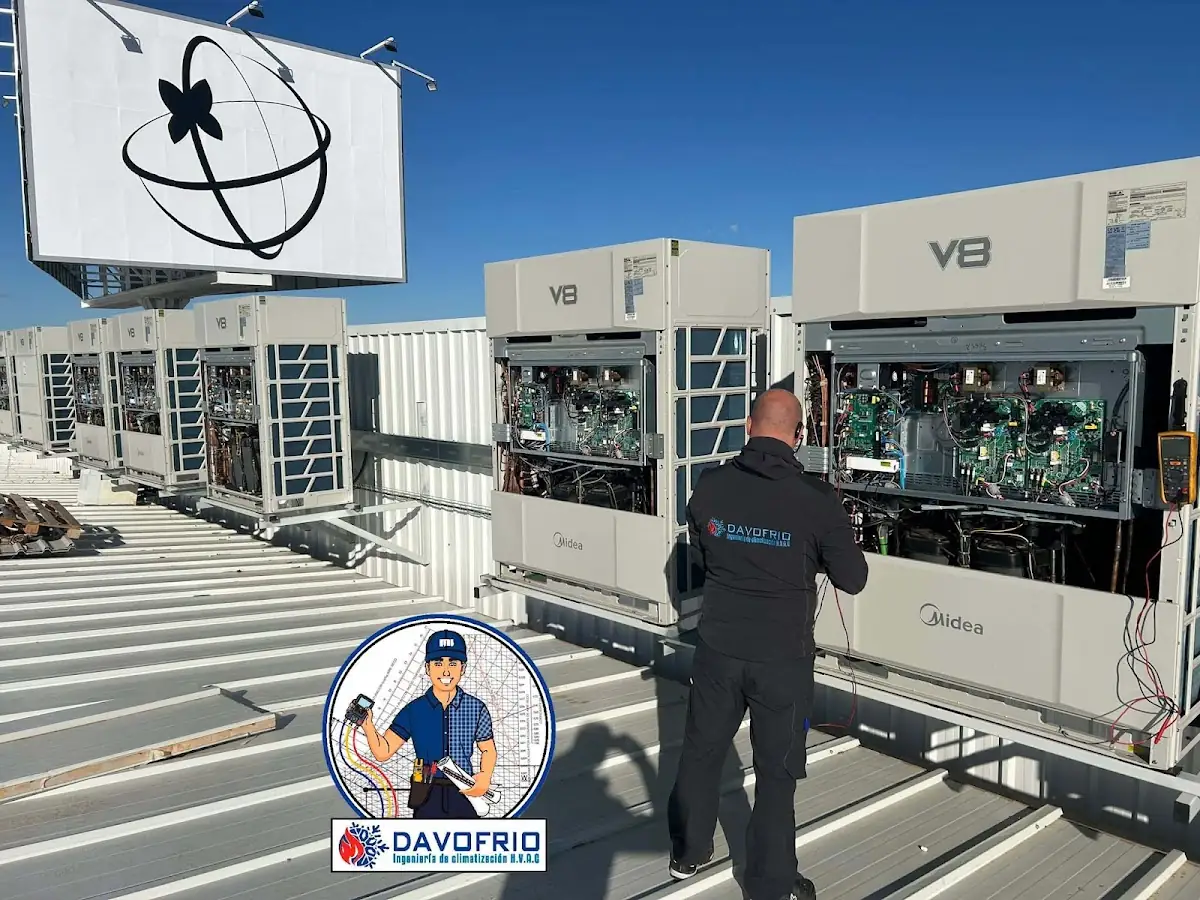
Maintaining a hotel's air conditioning
Spain's Regulation on Thermal Installations in Buildings (RITE) requires installations to be maintained. Those over 70 kW, which is normal for a hotel, must be maintained by an authorised maintenance company under a maintenance contract, with its schedule of inspections and its records. They also undergo the periodic inspections required by the regulations.
In practice it includes cleaning filters, coils and drip trays, checking drains, pressures and controls, and a check before each season. With access points from corridors or service shafts, almost everything is done without entering occupied rooms.
How we work with hotels in Valencia at Davofrío
We have been installing air conditioning since 2003, with our own technicians and an ISO 9001:2015 quality system. With hotels we follow the same order on every project:
- Project details: floor area, use, number of zones and location. With that we give you an estimate of the cost of the study within 48 hours at most.
- Calculation before brand: we calculate the real thermal loads before choosing equipment, and design the pipework with specialist software.
- Signed calculation report before a VRF project is approved.
- Official technical service for brands such as Daikin and Hitachi, with training directly from the manufacturer and their warranty.
- Fixed written quote after the visit, and preventive and corrective maintenance once it is up and running.
Frequently asked questions about hotel air conditioning
VRV or fan coils for a hotel in Valencia?
It depends on the building. VRV works well in mid-sized city hotels and in refurbishments with little plant space. Fan coils with water-based production are better suited to large hotels, those with an existing water network or with a pool and spa.
Can the air conditioning be replaced without closing the hotel?
Yes. The work is done by floors or blocks of rooms, installing the new production first and commissioning each block before opening up the next. Noisy work is done at agreed times.
Is maintenance of a hotel's air conditioning compulsory?
Yes. The RITE requires thermal installations to be maintained, and those over 70 kW must have an authorised maintenance company and a maintenance contract.
What happens to the plant on the roof of a beachfront hotel in Valencia?
In Malvarrosa, El Cabanyal or La Patacona de Alboraia, salt air attacks the coils and connections. Outdoor units need anti-corrosion protection and more frequent cleaning than in the inner city.
Can the hotel's hot water be produced with an air-source heat pump?
Yes. An air-source heat pump produces hot water without combustion, and it can cover all the demand or back up the existing production. It is sized for the morning peak and in compliance with legionella regulations.
Request a study for your hotel in Valencia
If you are refurbishing a hotel, opening a new one, or your installation uses more energy or makes more noise than it should, ask for a visit. We calculate the loads and give you a fixed written quote, with the work in phases if the hotel stays open.
Take a look at our VRF and VRV systems for businesses or the page for Davofrío Valencia. You may also find useful VRV air conditioning in Valencia, centralised air-conditioning control and how to recover money with energy saving certificates.
Hotel air conditioning in Valencia: where to find us
Davofrío Valencia · Av. de les Corts Valencianes, 58, 46035 València
Phone: 960 00 20 33
Opening hours: Monday 9:00 to 16:00; Tuesday to Thursday 9:00 to 14:00 and 16:00 to 18:00; Friday 9:00 to 18:00
Areas we cover: Campanar, Benicalap, Benimaclet, Russafa, el Cabanyal, Burjassot and the metropolitan area.
Full details of the branch on Davofrío Valencia.


 Spanish
 English
 French